Over the past month, two Sub-Committee meetings were held within the framework of the International Maritime Organization: the 13th session of the Sub-Committee on Pollution Prevention and Response (PPR 13, 09–13 February) and the 12th session of the Sub-Committee on Human Element, Training and Watchkeeping (HTW 12, 23–27 February).
During both events, delegates focused on developing amendments to the Organization’s key instruments: the International Convention for the Prevention of Pollution from Ships, 1973 (MARPOL), the International Convention on Standards of Training, Certification and Watchkeeping for Seafarers, 1978 (STCW Convention), and the Seafarers Training, Certification and Watchkeeping Code, 1995 (STCW Code).
The PPR Sub-Committee worked on draft updates to Chapters I and IV of the MARPOL Convention regarding bilge and sewage water management procedures. It also agreed upon changes to Chapter VI, introducing a requirement for crude oil tankers to be equipped with pressure-vacuum devices with a view to reducing air pollution with volatile organic compounds (VOCs).
Other significant results include developing updated draft of the Strategy and the Action Plan to Address Marine Plastic Litter from Ships, finalising amendments to the NOX Technical Code, deciding on the future introduction of a dedicated code for the seaborne transport of plastic pellets in containers, etc.
Additionally, the russian federation submitted document PPR 13/INF.22 regarding the cleanup of the marine casualty involving two “Volgoneft” tankers that took place in December 2024 near the Kerchenska Strait. The Ukrainian delegation strongly condemned the attempt to present the disaster as a purely technical incidence, ignoring its political and legal circumstances, as well as transborder environmental damage. Ukraine emphasised the wrongfulness of international maritime law violations committed by the russian side before and after the heavy fuel oil spill, as well as drew global attention to persecution by russia of Ukrainian scientist Vladyslav Balinskyi, who researches the casualty and its consequences.
All results of PPR 13 as regards the amendments to IMO instruments will undergo further analysis and approval during the 84th session of the Marine Environment Protection Committee (MEPC 84), scheduled for 27 April – 01 May 2026.
More details about the PPR meeting are available on the IMO website.
For its part, the HTW Sub-Committee continued its comprehensive review of the STCW Convention. Delegates discussed numerous proposed amendments to seafarers’ competencies and training requirements. Additional focus was put on integrating the quality standards audit system (regulations I/7 and I/8) into the IMO Member State Audit Scheme (IMSAS). A special Working Group was finalising interim guidelines for training of crew members on ships that use ammonia and methanol or ethanol as fuel.
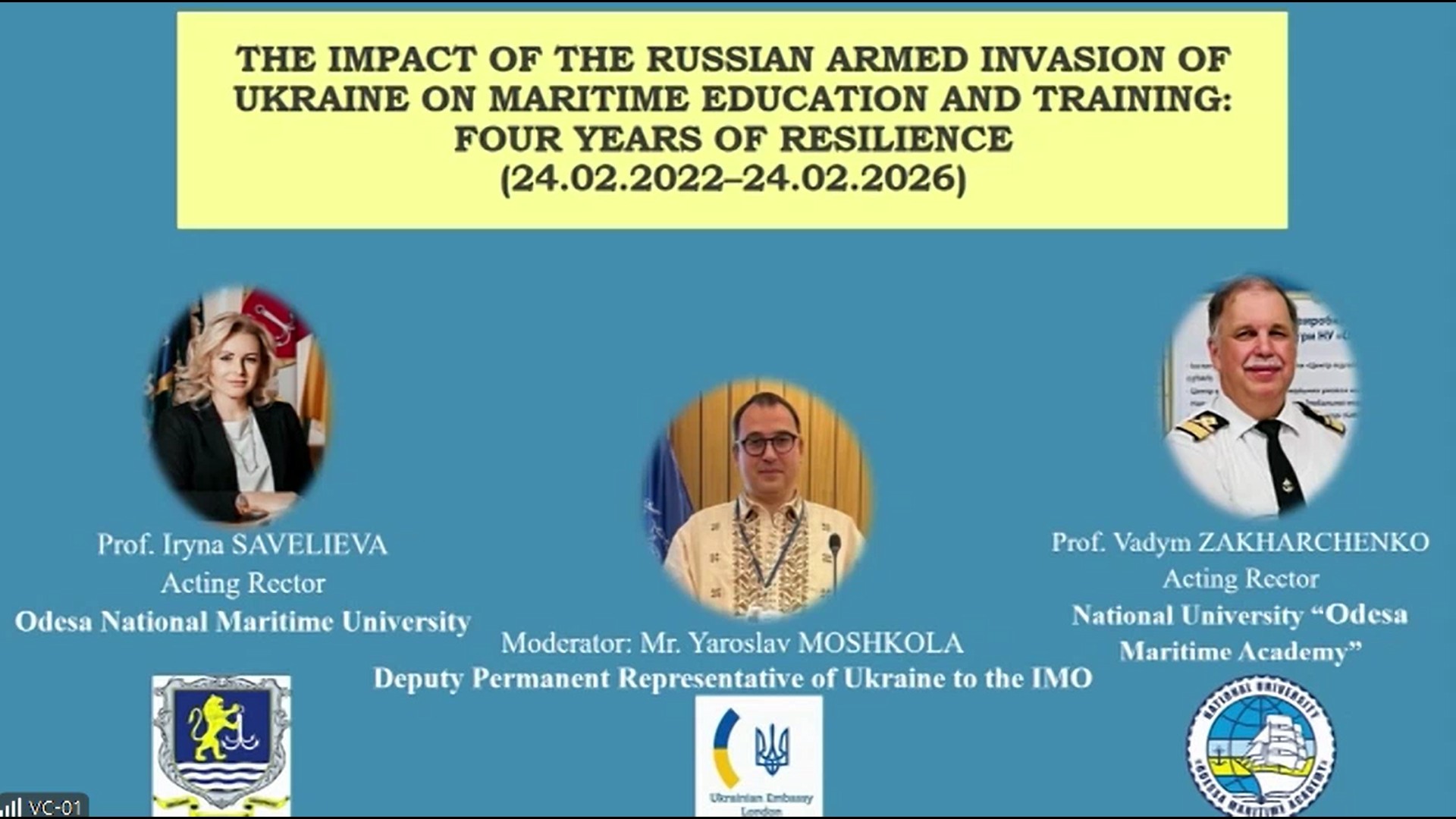
On the sidelines, a public presentation marked four years since the full-scale invasion of Ukraine by the russian federation began. Acting Rectors Vadym Zakharchenko (National University “Odesa Maritime Academy”) and Iryna Savelieva (Odesa National Maritime University) demonstrated Member States how the Ukrainian maritime education and training system has been functioning since 24 February 2022. The Ukrainian delegation noted that russia’s actions undermine the global personnel training framework for merchant shipping and, consequently, the sustainable international seaborne traffic.
During the HTW Sub-Committee session, a debate arose on implementation of resolution MSC.560(108), amending the STCW Code. The International Chamber of Shipping (ICS) suggested in document HTW 12/11 that these new competencies concerning prevention of violence and harassment (including sexual harassment and bullying) should only be included in training programmes for cadets at maritime higher education institutions. As the submitters suggested, experienced seafarers are not subject to amendments since the STCW Code has no provisions regarding the refresher training on personal safety and social responsibilities as set out in table A-VI/1-4.
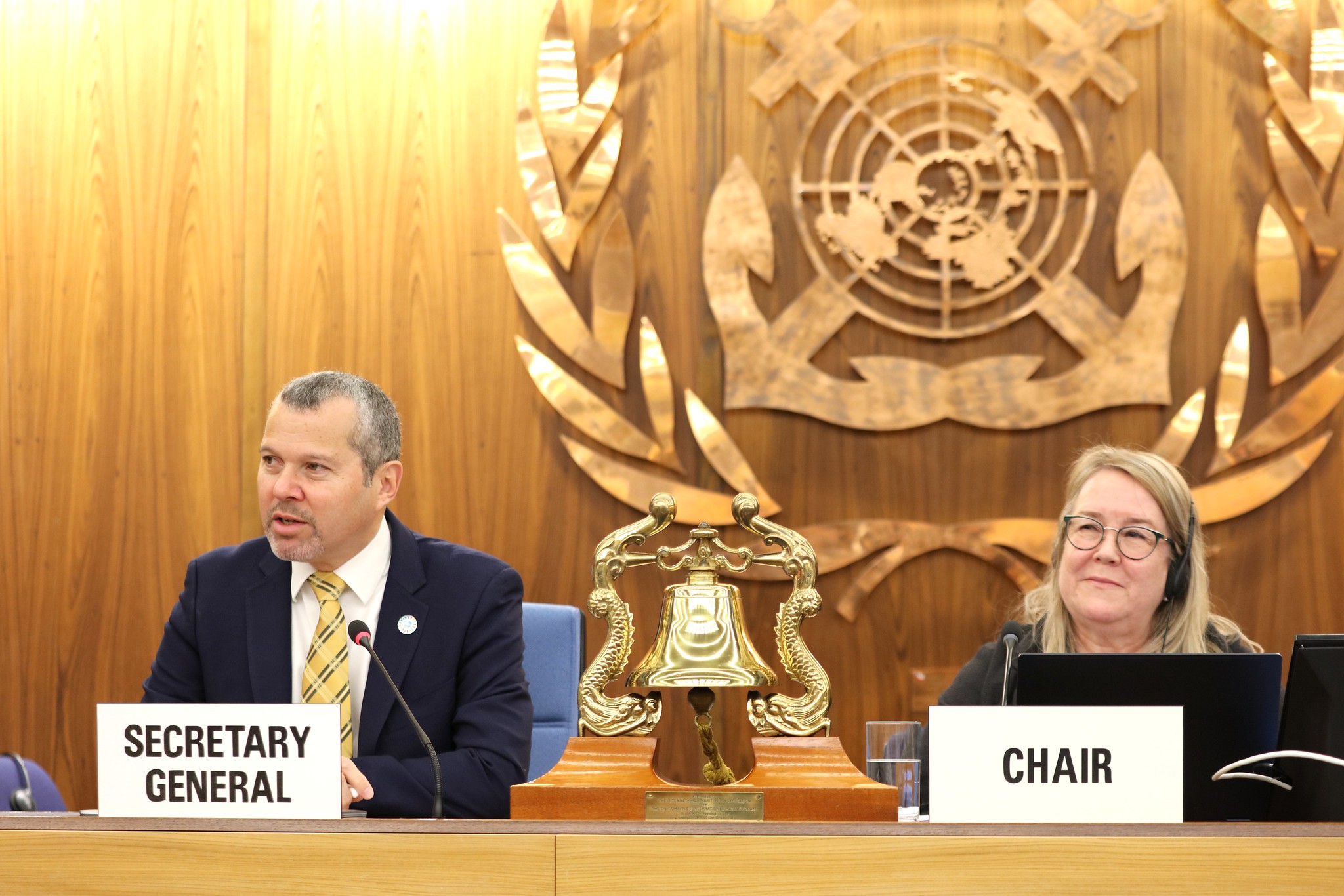
Meanwhile, the Chair of the Meeting, Haakon Storhaug (Kingdom of Norway), together with IMO Secretary-General Arsenio Domínguez, spoke against such one-sided approach. Following a lengthy discussion, the Sub-Committee delegated the matter to the Working Group, which determined that the development of a specific explanatory circular was unnecessary. Hence, IMO Member States reaffirmed that the amendments are mandatory for all crew members, regardless of their professional experience on board, and noted that Parties to the STCW Convention shall independently find a pragmatic way to implement these novelties.
Thus, implementation of the provisions of resolution MSC.560(108) in Ukraine, providing, in particular, that seafarers need to undergo additional training in order to acquire new competencies even if they hold a valid certificate of proficiency in basic safety training, aligns with approaches recognised at the highest international level.
Please be also advised that this additional training may be completed at any seafarers’ training institution having training programmes that incorporate the amendments and are approved by the Shipping Administration. An up-to-date list of such institutions is published on the official website of the State Service for Maritime, Inland Waterway Transport and Shipping of Ukraine.
A fundamentally new phase of updating seafarers’ training standards in the STCW Convention and Code is set to continue, notably during the 2nd Meeting of the Intersessional Working Group (ISWG-STCW), scheduled for 02–06 March 2026. It serves as a direct follow-up to the 12th session of the HTW Sub-Committee.