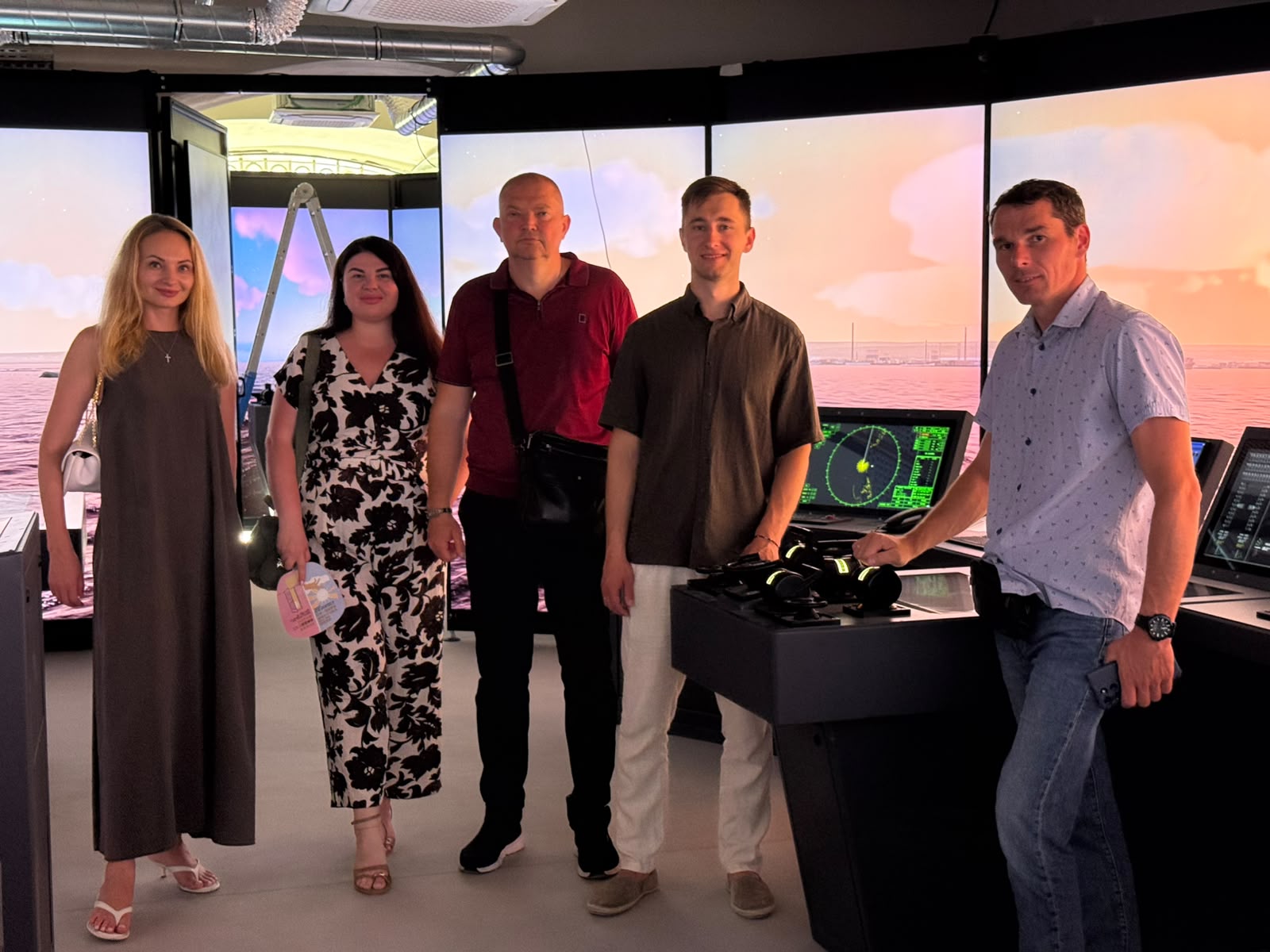
From July 6 to July 10, 2026, Ukrainian delegation visited Genoa, Italian Republic, to exchange experience on inspecting maritime education institutions. The visit was organized under Activity 1.6.1 of the Twinning Project “Institutional Support to the State Service for Maritime, Inland Waterway Transport and Shipping of Ukraine in the Implementation of the EU acquis, Norms and Standards on Maritime Safety”.
The event was jointly organized by the Italian Coast Guard and the Italian Shipping Academy.
During the visit, the representatives of the Ukrainian delegation focused on the following key areas:
- procedures for recognition (approval) of maritime education and training institutions responsible for seafarers training;
- mandate of the Italian Coast Guard regarding the inspections of education and training institutions and specific methods used to exercise these powers;
- legal and regulatory framework governing the approval and inspection procedures of education and training institutions;
- analysis of newly adopted laws and regulations in the field of seafarers training;
- procedures for organizing and conducting inspections of education and training institution, including documents consideration, pre-inspection preparation, types of control measures, differences between them, and the process of direct on-site inspection;
- exploring material and technical resources of a new building of the Italian Shipping Academy, specifically focusing on the advanced simulator equipment used for training navigators and engineers;
- visiting the Ente Radar training center, during which the practical aspects of undergoing recognition procedures for maritime education and training institutions were examined, as well as challenges arising from the interaction between these institutions and the authority, authorized to perform respective functions, were discussed.
Particular attention was focused on ensuring the competence of teaching and instructional staff at maritime training institutions, alongside the practical aspects of institutional recognition procedures. Additionally, the functioning of quality management systems was addressed, specifically regarding the implementation of the international standard for educational organizations management systems,
ISO 21001:2025. This framework enables educational institutions of all levels, from schools and universities to training centers, to elevate service quality and better align with the needs of learners and stakeholders. Furthermore, the visit to the Italian Maritime Academy highlighted the DNV-ST-0033 Standard. The primary objective of this standard is to ensure that simulator equipment accurately mirror real shipboard operating conditions, thereby facilitating effective training, competence assessment, and certification of maritime professionals.
The Ukrainian attendees expressed their keen interest in implementing these standards in Ukraine, identifying them as crucial for ensuring the appropriate quality of training at seafarer training institutions. Furthermore, they emphasized the role of these standards in enhancing management system efficiency during the training process, as well as in facilitating the certification of simulator equipment in strict accordance with international requirements and best practices.
The sessions also addressed common deficiencies and non-conformities revealed during inspections, the process of documenting them, and the legal consequences of such findings. Additionally, mechanisms for eliminating identified deficiencies were examined, along with follow-up procedures for corrective actions to guarantee that maritime training providers operate in full compliance with national laws and international standards.
The event participants held professional discussions with representatives of the Italian Coast Guard and maritime training institutions regarding the practical implementation of specific regulatory provisions. Additionally, a comparative analysis was conducted between the legislation of Ukraine and the Italian Republic governing approval procedures for training institutions, execution of inspections, and organization of state supervision in this field.
A key component of the visit was the dialogue on the challenges facing Ukraine's maritime training and certification system due to russia's full-scale invasion and the imposition of martial law. The Ukrainian delegation provided their Italian colleagues with a detailed overview of how educational continuity, practical training, and the stable operation of simulator centers are maintained under wartime conditions. Experts from both countries jointly discussed instruments to overcome these challenges while strictly adhering to international standards.
The experience gained, alongside a comparative analysis of Ukrainian and Italian legislation, will serve as a foundation for further improvement of the state supervision system in the field of seafarers training in Ukraine in alignment with EU requirements.